What Bios Don’t Show

EDITOR’S NOTE
To introduce Whyte-Hall Communications Network | Practice Profiles, the inaugural issue turns the series on its own founder, Delroy A. Whyte-Hall. Future profiles will examine people working throughout real estate, with the same focus on the judgment, methods, experience and working practices behind what they do.
INAUGURAL PRACTICE PROFILE
This Practice Profile was produced and published by Whyte-Hall Communications Network as an inaugural or house profile and was not a paid participant transaction. The participant supplied source information and reviewed the profile before publication. Whyte-Hall Communications Network retained editorial and verification control.
Delroy A. Whyte-Hall explains how clearer profiles, listings, websites and press materials can make professional experience, judgment and work easier to understand before the first conversation.
Long before a prospective client speaks with a real estate agent or broker, that person may already be forming an opinion.
It can begin with a listing description, a Google search, an agent biography, a LinkedIn profile, a brokerage website or even an email. Piece by piece, the reader starts deciding whether the person behind the information seems knowledgeable, careful, credible and worth contacting.
Delroy A. Whyte-Hall has built his work around what happens during those few minutes.
As founder of Whyte-Hall Communications Network, Whyte-Hall examines what real estate professionals and related businesses put in front of the public and asks a deceptively simple question:
What is the reader actually likely to understand and believe?
His work includes listing descriptions, professional profiles and biographies, press releases, deal summaries, client communication and website copy. The common thread is not making the subject sound more impressive. It is making the substance of the work easier to see.
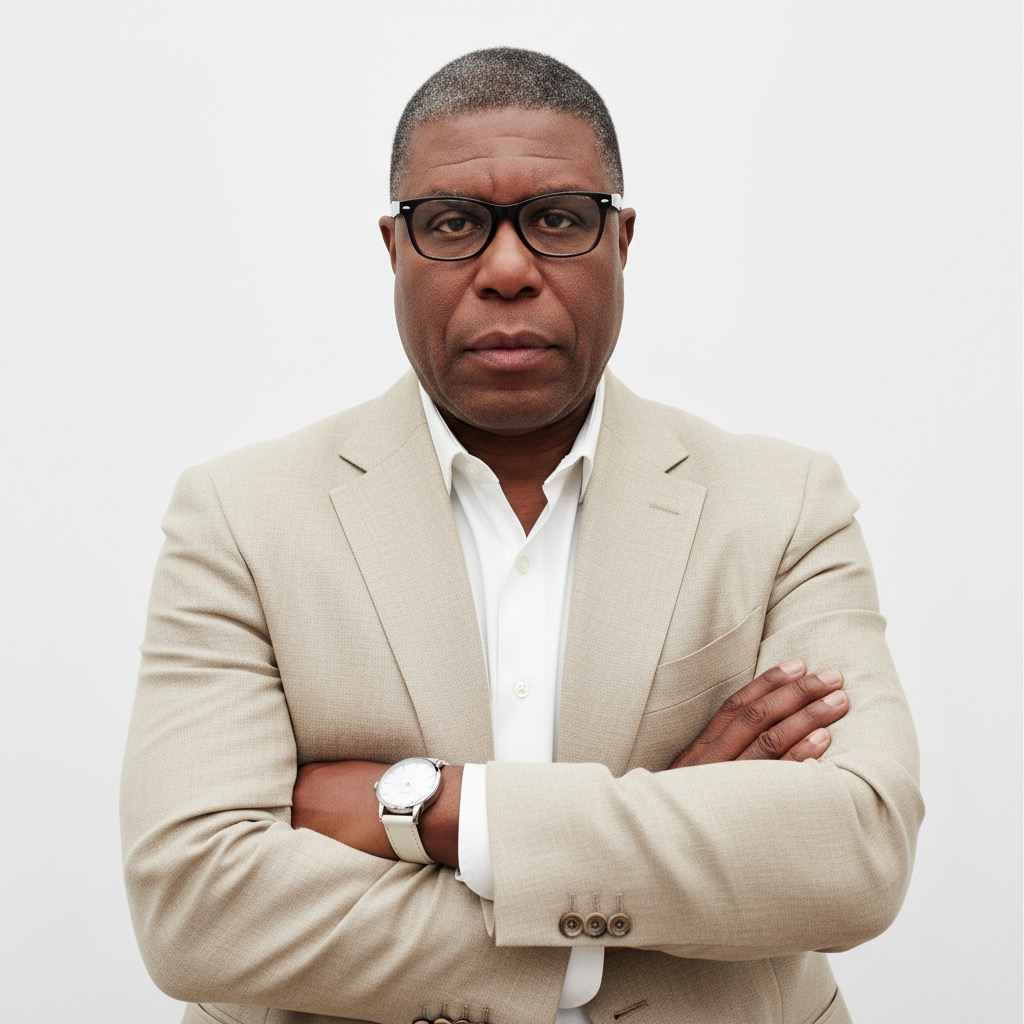
Delroy A. Whyte-Hall, Founder/CEO Delroy A. Whyte-Hall, founder of Whyte-Hall Communications Network.
Delroy A. Whyte-Hall
Founder of Whyte-Hall Communications Network, examining how evidence, reader interpretation and professional experience shape real estate communication.
“A lot of capable professionals have more experience and judgment than their public communication shows,” Whyte-Hall says. “Sometimes the information is there, but it is buried. Sometimes the language is vague or sounds like everybody else. My job is to help make the substance clearer so the reader does not have to guess.”
A Career Built Around Information
Whyte-Hall did not begin his career planning to specialize in real estate communication.
His background stretches across military intelligence, journalism, photography, editing, public relations, tourism communication and publishing. On the surface, those fields can appear unrelated, but he sees a common discipline running through them: gathering information, understanding the audience and determining how to explain what matters.
That experience eventually shaped the way he began looking at real estate.
Through journalism and public relations, he had learned to notice not only what information was available but also what was missing. When he started examining the way real estate professionals presented themselves publicly, he repeatedly saw a gap between what they appeared to know and do in practice and what a prospective client could actually learn from their public materials.
An agent, for example, might have years of experience and a record of helping clients through difficult transactions, but the biography presented to the public could reduce all of that experience to familiar claims about being “dedicated,” “passionate” or committed to “exceptional service.”
For Whyte-Hall, the problem was not necessarily that those descriptions were false.
The problem was that they told the reader very little.
“That gap interested me,” he says.
Whyte-Hall Communications Network grew from the belief that communication should help people understand the work rather than simply decorate it.
Finding the Story That Is Already There
That distinction affects the way Whyte-Hall approaches assignments.
When reviewing a professional profile, he wants to know whether a person encountering that professional for the first time can understand what the experience actually means.
When working on a listing description, he looks for the information that helps explain the property rather than burying it beneath familiar sales language.
A press release presents a different problem. There, the question becomes whether something genuinely newsworthy has happened and whether a reporter is being given enough information to understand its significance.
Website work may require reorganizing existing material so a visitor can determine what a company does, who it serves and why its experience matters without having to piece the explanation together from several pages.
Across those assignments, Whyte-Hall says the part of the work that interests him most is often finding information that already exists but has not yet been made useful to the reader.
“I am not trying to make ordinary work sound extraordinary,” he says. “I would rather identify what actually happened, what the professional did, how the situation was handled and why that work mattered.”
Evidence Before Adjectives
Whyte-Hall approaches communication from the position of the person encountering it for the first time.
Instead of beginning with what the agent, broker or business wants to say, he looks at what the reader has actually been given and what that information is likely to lead the reader to conclude.
That means asking several practical questions:
- What is the reader likely to assume from the information presented?
- What does the reader need to understand before making a decision?
- What information would remove the most uncertainty?
- Has enough evidence been provided to support the conclusion the communication wants the reader to reach?
Those questions matter because prospective clients frequently encounter a professional’s communication before they encounter the professional.
A profile that says someone is experienced, for example, may be technically accurate. But Whyte-Hall wants to know what demonstrates that experience and what it has enabled the person to handle.
If a transaction is described as difficult, he wants to know what made it difficult. If someone says a service created value, he wants to know what changed because that work was performed.
“I do not like asking a reader to accept a conclusion that the information has not earned.”
That principle also explains Whyte-Hall’s preference for plain language.
Writing so someone can understand something on the first read does not require oversimplifying it. It requires deciding what belongs together, organizing the information properly and giving the reader enough context to follow the situation.
His underlying rule is straightforward:
Do not make the reader guess when the information needed to understand something can be provided clearly.
The Value Beyond a Single Document
A rewritten profile, listing description, press release, website page or client letter may be the immediate assignment, but Whyte-Hall sees the longer-term value differently.
He is trying to leave the client with communication that can continue explaining the work after the original assignment is over.
A well-developed professional profile can affect what a prospective client understands while researching someone months later. A deal summary can preserve the story of how a complicated transaction was handled. A properly constructed press release can give a journalist enough context to decide whether the announcement deserves coverage.
The document, in other words, becomes part of the public-facing information through which the professional is understood.
“I want the finished communication to leave the professional with something useful, accurate and reusable,” Whyte-Hall says, “rather than merely something that sounds impressive for a few days.”
When Producing More Becomes Easier
Artificial intelligence has made the question of what communication actually says even more important to Whyte-Hall.
He is watching AI closely, but not simply because it can produce words, images and other content faster. He is more interested in what happens as producing polished material becomes easier.
More communication does not necessarily produce more understanding.
As the volume of polished content grows, he expects readers to have even more reason to look for specificity.
What is supported? What comes from firsthand experience? What demonstrates judgment? What actually tells the reader something about the person behind the language?
That could make generic positioning less useful, even when it is professionally presented.
For real estate professionals, Whyte-Hall believes this puts greater value on evidence, judgment, firsthand knowledge and communication that can be connected to real work.
Technology can help organize information and make production easier. What it cannot do on its own is assume responsibility for deciding what another person needs to know, what the available evidence supports or what should not be claimed.
Those decisions remain human ones.
Making the Work Easier to Understand
Whyte-Hall’s work ultimately returns to the same problem that first attracted his attention to real estate communication.
There is often more behind a professional or business than the public can see.
Years of experience may be compressed into a number. Difficult transactions may disappear into a list of closings. Judgment developed over time may never make it into the biography. Useful information may sit on a website without being organized in a way that helps a visitor understand its significance.
The answer is not necessarily to say more.
Sometimes it is to investigate more carefully, organize what is already known and explain the part that matters.
That is the work Whyte-Hall Communications Network has been built to do: reduce the distance between what someone actually knows and does and what the person reading about them is reasonably able to understand.
Readers can learn more about Delroy A. Whyte-Hall and Whyte-Hall Communications Network at whytehallcommunications.com. He also publishes regularly about real estate communication and shares observations through LinkedIn.
For a specific communication question or project, he can be reached at delroy@whytehallcommunications.com.
Interested in participating?
Practice Profiles examines how people whose work forms part of real estate approach what they do.
If you would like to be considered for a future profile—or would like to recommend someone whose work you think warrants a closer look—send or comment PRACTICE.
Expressions of interest are reviewed before any invitation is made. Expressing interest does not guarantee selection or publication. Standard Practice Profiles participation is a paid Whyte-Hall Communications Network professional profile service.
DM or comment PRACTICE to express interest or recommend someone.
ABOUT THE PRACTICE PROFILE
This inaugural Practice Profile examines how Delroy A. Whyte-Hall approaches real estate communication and how his experience across intelligence, journalism, photography, editing, public relations and publishing informs the way he evaluates evidence, reader understanding and professional claims.
The profile was developed from participant-supplied experience and responses, supported by editorial questioning, professional editing, verification where required, and participant review.
The purpose is to make the practice itself easier to understand: what the professional notices, how decisions are approached, what experience has changed, and what readers may otherwise never learn from a conventional biography.
Whyte-Hall Communications Network | Practice Profiles
About Practice Profiles
Practice Profiles is a Whyte-Hall Communications Network series examining how people whose work forms part of real estate approach what they do. Participants may work in brokerage, property management, development, construction, appraisal, inspection, lending, title, law, photography, marketing, communication, technology, consulting, investment, or other areas connected to real estate. Each profile is developed from participant-supplied experience and responses, supported by research, editorial questioning, professional editing, verification where required, and participant review. The aim is to move beyond titles and promotional claims and give readers a clearer understanding of the judgment, methods, experience, working practices, and professional thinking behind the work.
Photo credit: Delroy A. Whyte-Hall / Whyte-HalliMages
© 2026 Whyte-Hall Communications Network. All rights reserved.